What Is a Beneficial Owner (UBO)? Definition, the 25 Percent Threshold and How to Identify One
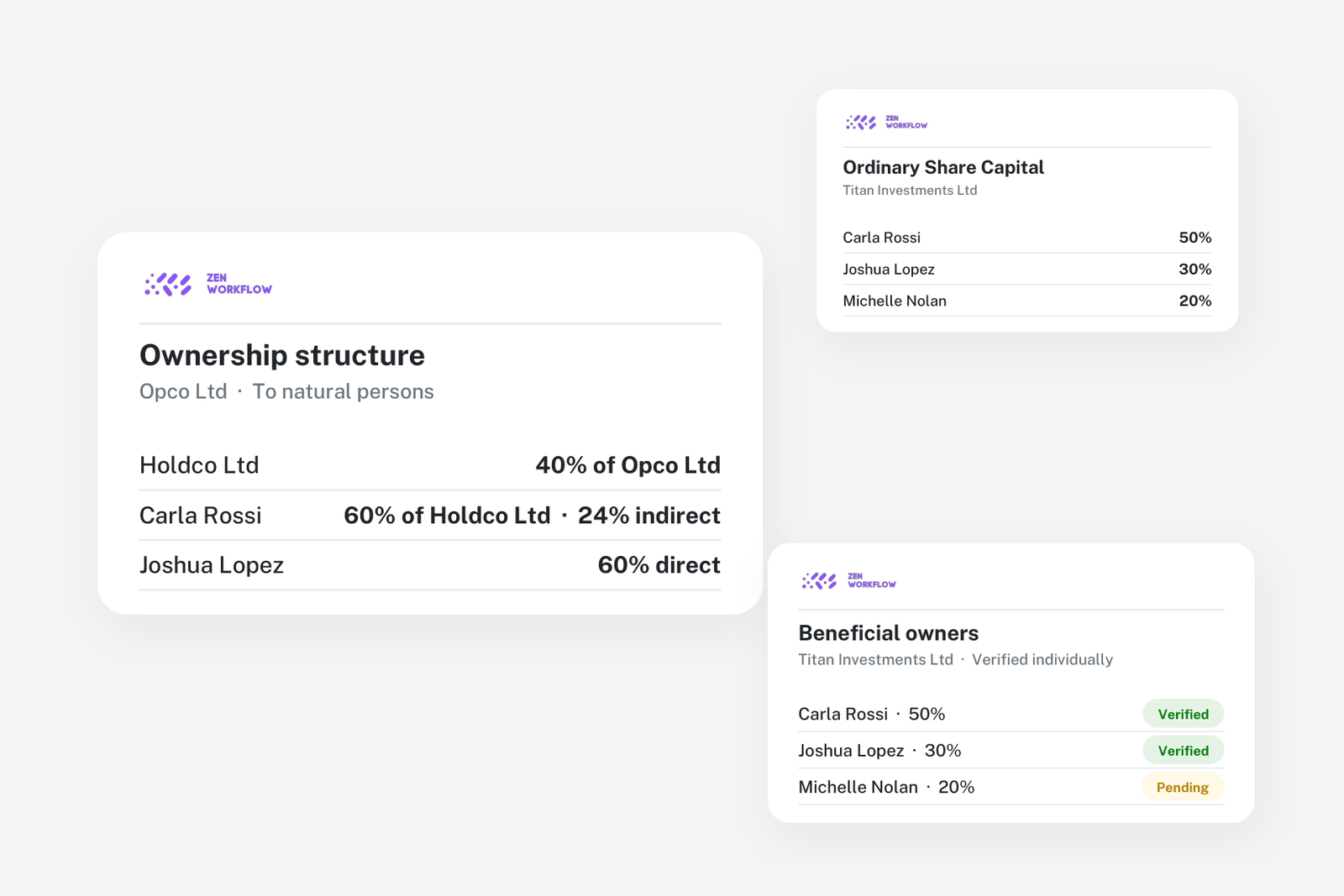
A beneficial owner is any natural person who ultimately owns or controls a legal entity, directly or indirectly, or on whose behalf a transaction is conducted. For a company, anti-money-laundering rules in the EU and the UK treat a person as a beneficial owner when they hold more than 25 percent of the shares, voting rights or ownership interest, or when they control the company by other means. The term ultimate beneficial owner, or UBO, means the same thing and emphasises that the search goes through every layer of ownership until it reaches a human being.
Key takeaways
- A beneficial owner is always a natural person. A company cannot be one. The search continues through holding companies, trusts and nominees until it reaches individuals.
- The threshold in the EU and UK is more than 25 percent, directly or indirectly. Firms may apply a lower threshold for higher-risk clients.
- Control by other means counts even below 25 percent: the right to appoint or remove most of the board, veto rights, or informal arrangements.
- If no person can be identified after all reasonable means are exhausted, the senior managing officials are recorded as the beneficial owners, and the firm documents what it tried.
- Every beneficial owner must be identified, verified and screened in the same way as the client.
How is indirect ownership calculated?
Indirect ownership is traced by multiplying percentages through each layer and by checking control at each layer.
Example: Mr A owns 60 percent of Holdco. Holdco owns 40 percent of Opco. Mr A's indirect interest in Opco is 60 percent × 40 percent = 24 percent, below the threshold on the arithmetic. But Mr A controls Holdco with 60 percent, and Holdco's 40 percent of Opco is a significant stake. Most supervisors expect the firm to treat a person who controls an entity that holds more than 25 percent as a beneficial owner. The EU regulation applying from 2027 sets out this layered approach explicitly.
The practical rule is to draw the chart from the client up to every natural person, record the percentage at each layer, and ask at each layer both "how much does this person own?" and "does this person control this entity?"
What counts as control by other means?
A person may be a beneficial owner without reaching 25 percent where they can control the company in practice. Indicators include:
- The right to appoint or remove a majority of the directors
- Veto rights over significant decisions
- A shareholder agreement that gives them decisive influence
- A position as a trustee, settlor, protector or beneficiary of a trust that holds the shares
- Informal arrangements where another shareholder acts on their instructions
Nominee shareholders and nominee directors are the typical cases: the person on the register is not the beneficial owner, and the person who instructs them is.
What about trusts and foundations?
For trusts, the beneficial owners are the settlor, the trustees, the protector if any, the beneficiaries or class of beneficiaries, and any other person exercising ultimate control. Foundations and similar arrangements are treated the same way. Where a trust holds shares in a client company, all of those persons are beneficial owners of the company for due diligence purposes.
The senior managing official fallback
Where, after exhausting all reasonable means, no natural person meets the ownership or control test, the firm records the senior managing officials, usually the directors, as the beneficial owners. This is a last resort, not a shortcut. The file must show what was done to identify a beneficial owner before falling back to it, and widely held or listed companies have their own rules.
What must a firm record for each beneficial owner?
- Full name, date and place of birth, nationality and residential address
- Identity document type, number, issuing country and expiry date
- The nature and extent of the interest: percentage held, or the basis of control
- Verification evidence, with the date and the person who verified it
- Screening results for sanctions, politically exposed person status and adverse media
- The ownership chart showing the chain from the client to the person
The beneficial ownership registers maintained in each country are consulted as part of the process but do not replace the firm's own identification and verification. Where the firm's findings differ from the register, the discrepancy is recorded and, where the rules require it, reported.
Why does it matter?
Beneficial owners are the people who benefit from the client's activity and the people a money launderer most wants to hide. Supervisory inspections consistently find beneficial owners identified but not verified, charts that stop at a holding company, and new directors or shareholders who were never screened. Each is a finding against the firm, however good the rest of the file. What a client risk assessment must contain covers how the beneficial owner findings feed the client's rating.
Recording it in ZenWorkflow
ZenWorkflow records each beneficial owner as a person on the client record with their identification data, percentage or basis of control, verification documents with expiry dates and individual screening results, and draws the ownership chart from the capital structure. A new shareholder or director is a new person to screen, visible beside everyone else on the client's KYC tab. The AML and KYC module page describes the full process, and corporate service providers administering layered structures are its heaviest users.
Frequently asked
Is a director automatically a beneficial owner? No. A director is recorded as a senior managing official only where no beneficial owner can be identified. A director who also owns more than 25 percent is a beneficial owner by ownership.
Does the 25 percent threshold apply at each layer? The test is the person's ultimate interest in the client, direct and indirect combined, together with control at any layer. A person controlling an intermediate company that holds more than 25 percent is generally treated as a beneficial owner.
Can a firm apply a lower threshold? Yes. The 25 percent is a maximum indicator. Firms may and, for higher-risk clients, often should look below it.
What if a beneficial owner refuses to provide identification? Then due diligence cannot be completed and the firm must not establish or continue the relationship, and should consider whether a suspicious activity report is warranted.